
 Afghanistan
 Albania
How to Choose a Reliable BIBO Filter Housing Supplier in China
Selecting a reliable Bag-In / Bag-Out (BIBO) filter housing supplier is an important decision for pharmaceutical manufacturers, biosafety laboratories, hospitals, and industrial facilities handling hazardous materials. A BIBO system is not simply an exhaust filter enclosure. Its design, sealing performance, filter configuration, and replacement procedure all influence the safety and reliability of an air filtration system.
China has a growing number of manufacturers offering industrial air filtration and containment equipment. However, suppliers can differ considerably in engineering experience, manufacturing capabilities, quality control, and customization services. For international buyers, comparing suppliers based only on product appearance or general specifications is not enough.
This guide explains the key factors to consider when selecting a BIBO filter housing supplier in China and how an experienced manufacturer such as KELSEN approaches containment equipment design and production.
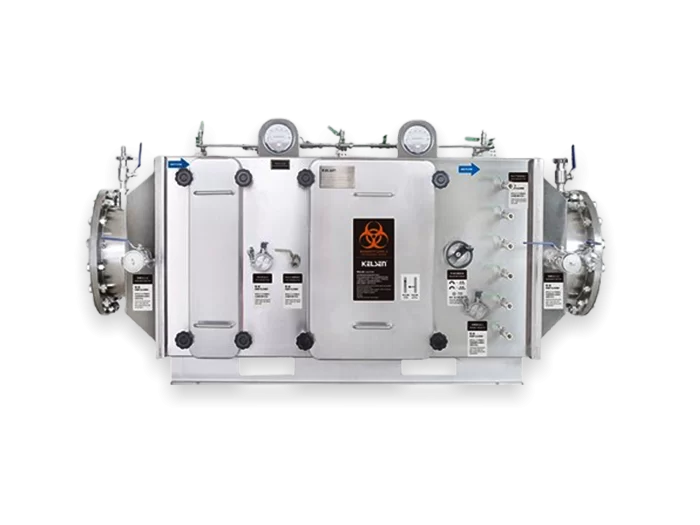
1. Understand the Working Principle of a BIBO Filter Housing
Before evaluating suppliers, buyers should understand what makes a BIBO filter housing different from a conventional filter box.
A Bag-In / Bag-Out housing is generally installed in an exhaust ventilation system to capture hazardous particles and contaminants before air is discharged. It is commonly used in environments where maintenance personnel may be exposed to biological, chemical, radioactive, or other hazardous substances.
Its most important feature is the enclosed filter replacement method.
During routine maintenance, the contaminated filter is handled inside a protective change-out bag attached to the housing access opening. The operator can remove the used filter and install a replacement without directly handling the contaminated filter. The bag is secured and manipulated through a controlled procedure to reduce the possibility of contaminant release.
A properly designed BIBO system should consider several elements:
A sealed housing structure to reduce leakage risks.
A secure connection between the housing and protective change-out bag.
Reliable filter seating and sealing arrangements.
Suitable access doors and locking mechanisms.
Optional pressure monitoring and filter leak-testing components.
When evaluating a manufacturer, buyers should ask how these components are designed and how the complete system is tested.
2. Evaluate the Manufacturer's Engineering and Industry Experience
A reliable BIBO supplier should understand more than sheet-metal fabrication. The manufacturer needs experience with air filtration, containment requirements, ventilation systems, and filter replacement procedures.
Different industries have different operating conditions. A pharmaceutical production facility may require containment during the handling of high-potency compounds, while a biosafety laboratory may need to control potentially hazardous biological aerosols. Industrial chemical facilities may have additional requirements related to corrosive gases or specific chemical filtration media.
Therefore, a supplier should be able to discuss the intended application before recommending a configuration.
Buyers should review the manufacturer's company history, engineering team, product portfolio, manufacturing facilities, and previous project experience.
For example, KELSEN has specialized in air filtration and containment systems for critical environments since 2006. Its product portfolio covers BIBO systems, isolators, airtight doors, biosafety pass boxes, and other equipment used in pharmaceutical manufacturing, biosafety laboratories, healthcare facilities, and industrial cleanrooms.
This broader product experience is useful when a BIBO housing needs to work as part of a larger containment or exhaust filtration system.
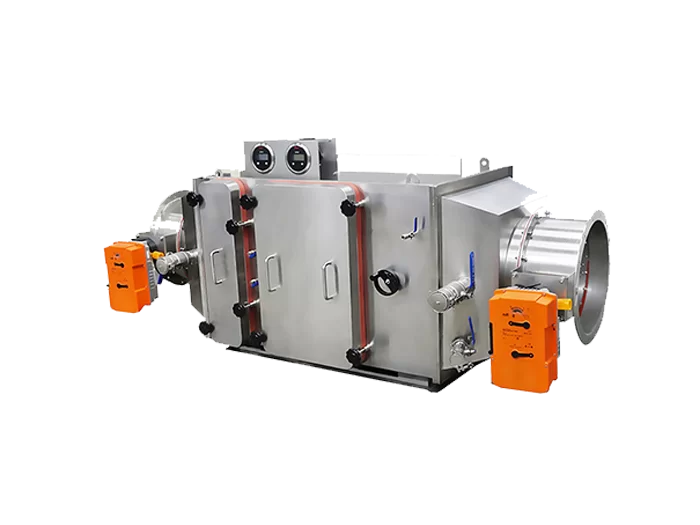
3. Check Housing Construction and Airtightness Testing
Housing construction is one of the most important technical considerations.
A BIBO filter housing must maintain its enclosure integrity under the operating conditions specified for the project. Poor welding, unsuitable sealing materials, or inaccurate filter installation surfaces may create leakage paths and affect system performance.
When reviewing a supplier, ask about the following:
Housing fabrication: Is the enclosure manufactured using a fully welded structure? Are the welding processes and inspection procedures documented?
Material selection: Is the housing made from cold-rolled steel with protective coating or stainless steel such as SUS 304? The choice should reflect the operating environment, cleaning requirements, and chemical exposure.
Pressure resistance: Can the manufacturer provide the specified pressure resistance and corresponding test records?
Airtightness verification: Does the supplier perform airtightness testing before delivery? Can it provide test procedures and third-party reports when required?
KELSEN's BIBO housing product information describes a fully welded enclosure, standard pressure resistance of ±3 kPa, and factory airtightness testing at a pressure of no less than 2.5 kPa. The product page also identifies applicable Chinese standards and the availability of third-party performance testing.
These figures should be checked against the actual model and project requirements rather than treated as universal specifications for every BIBO installation.
4. Compare Filter Configurations and Airflow Capacity
Not every BIBO application requires the same filtration arrangement. A suitable supplier should be able to configure the filter stages according to the contaminants, airflow requirements, and operating conditions.
Common configurations include:
Single-stage HEPA filtration: Used where one high-efficiency filtration stage meets the project requirements.
Pre-filter and HEPA combination: A pre-filter captures larger particles and helps reduce the particle load on the final filter.
Multi-stage filtration: Additional medium-efficiency filters may be used where required.
Activated carbon or chemical filtration: Applied when the target contaminants require suitable adsorption or chemical filtration media.
Dual HEPA filtration: Used in system designs that specify two HEPA stages.
Buyers should compare the filter grade, dimensions, number of filters, rated airflow, and pressure-drop requirements. They should also confirm whether the filter can be replaced through the protective bag without interfering with adjacent components.
KELSEN lists H14 HEPA filtration based on EN 1822 for its KuBa BIBO housing models. The published specifications include several configurations:
| Model | Maximum Air Volume | External Dimensions (H × W × D) |
|---|---|---|
| KuBa-HNH | 1,700 CMH | 708 × 403 × 540 mm |
| KuBa-1CH | 3,400 CMH | 708 × 708 × 834 mm |
| KuBa-4CH | 13,600 CMH | 1,416 × 1,416 × 834 mm |
The available configurations also include different pre-filtration and activated carbon options. These specifications provide a useful starting point, but the final selection should be based on the required airflow, filter arrangement, system resistance, and installation conditions.
5. Examine the Bag-In / Bag-Out Replacement Design
The protective bag and filter access arrangement are central to BIBO operation. A housing may have suitable filtration performance but still be difficult to maintain if the replacement procedure is poorly designed.
Before placing an order, buyers should ask the supplier to explain the complete filter change-out process.
Important details include:
Protective bag material, length, and connection method.
Bag attachment and sealing arrangements.
Access door design and locking mechanisms.
Internal space available for filter removal and installation.
Safety belts, straps, or integrated gloves where applicable.
Procedures for securing and disposing of used filters.
A practical replacement demonstration or operation video can help maintenance teams understand the equipment before installation.
KELSEN's BIBO product uses a protective change-out bag approximately two meters long, with straps and safety belts. Its premium configuration also provides internal gloves to assist with filter handling.
The final design should be reviewed together with the customer's maintenance procedure and site safety requirements. A BIBO housing is one part of a containment system; correct installation, operating procedures, and trained personnel remain essential.
6. Confirm Customization and Installation Flexibility
Standard products are useful for many projects, but existing ventilation layouts often require customized dimensions, connections, or functional sections.
A qualified BIBO manufacturer should be able to review the site conditions and discuss practical design adjustments.
Common customization requirements include:
Housing dimensions: The enclosure may need to fit a limited mechanical room or an existing exhaust duct layout.
Installation orientation: Horizontal installation is common, while vertical or other arrangements may be required by site conditions.
Connection interfaces: Inlet and outlet dimensions should match the ventilation system.
Filter stages: The housing may require pre-filters, HEPA filters, activated carbon filters, or other specified filtration sections.
Monitoring and testing accessories: Options may include differential pressure gauges or sensors, PAO scanning sections, shut-off valves, and disinfection ports.
KELSEN's product information identifies horizontal installation as the standard arrangement while allowing vertical and other customized installation methods. It also states that housing dimensions and functions can be customized according to project requirements.
When requesting a quotation or technical proposal, buyers should provide available duct drawings, required airflow, filter specifications, installation orientation, material preferences, and maintenance access requirements. This helps the manufacturer develop a more accurate configuration.
7. Review Quality Control, Certifications, and Testing Documents
A supplier's quality management system is another important factor, particularly for pharmaceutical and biosafety applications.
Rather than relying on general statements such as "high quality" or "international standards," buyers should request documents that relate directly to the equipment being supplied.
Depending on the project, relevant documents may include:
Quality management system certificates.
Material specifications and inspection records.
Welding inspection documentation.
Airtightness test reports.
Filter performance certificates.
PAO leak-test records, where applicable.
Factory Acceptance Test (FAT) documentation.
Product-specific third-party test reports.
KELSEN's company information identifies ISO 9001 and ISO 13485 certifications and describes quality inspections, airtightness verification, leak testing, and Factory Acceptance Testing as applicable to its systems.
Its BIBO product page also identifies CNAS and CMA-related testing credentials and the availability of third-party performance testing.
Buyers should verify certificate validity, scope, issuing organization, and whether each document applies to the specific product or manufacturing process. Product-level testing should not be confused with company-level management system certification.
8. Consider Technical Communication and After-Sales Support
International projects involve more than manufacturing and shipment. Clear technical communication is necessary throughout equipment selection, production, installation, and commissioning.
Before choosing a supplier, consider whether its team can:
Review technical drawings and project specifications.
Clarify filter and airflow requirements.
Provide product drawings and installation guidance.
Explain the filter replacement procedure.
Supply inspection and testing documentation.
Respond to technical questions during installation and maintenance.
A supplier with experience in critical-environment equipment is generally better positioned to identify design issues before production begins.
For buyers who want to learn more about KELSEN's engineering background, manufacturing capabilities, and quality management, the KELSEN company profile provides additional information about its development, product range, facilities, and certifications.
9. Prepare a Clear Checklist Before Selecting a BIBO Supplier
To make supplier comparisons more objective, buyers can use the following checklist when requesting technical proposals.
| Evaluation Item | Questions to Ask |
|---|---|
| Application | Can the supplier understand the specific contaminants and operating environment? |
| Housing structure | What materials, welding methods, and sealing arrangements are used? |
| Filtration | Which filter grades, stages, and dimensions are available? |
| Airflow | Does the proposed model meet the required airflow and system resistance? |
| Change-out design | How is the protective bag attached and used during replacement? |
| Testing | Are airtightness and filter leak-test reports available? |
| Customization | Can dimensions, connections, materials, and accessories be adjusted? |
| Documentation | Can the supplier provide drawings, inspection records, and FAT documents? |
| Support | Is technical assistance available during installation and maintenance? |
A supplier that can provide clear answers and supporting documents is easier to evaluate than one that only offers a general product description.
Conclusion: Choose a BIBO Manufacturer Based on Verifiable Capabilities
Choosing a reliable BIBO filter housing supplier in China requires a careful review of engineering experience, housing construction, filtration configuration, safe filter replacement design, customization capabilities, and quality documentation.
The right manufacturer should be able to understand the application, recommend a suitable configuration, explain how the system will be tested, and provide technical support throughout the project.
With experience in air filtration and containment systems since 2006, KELSEN offers BIBO filter housings and related equipment for pharmaceutical, biosafety, healthcare, and industrial applications. Buyers evaluating a BIBO solution can review the Bag-In / Bag-Out Housing product details to learn more about its housing configurations, filter options, technical specifications, and available accessories.
A well-selected BIBO system is not simply a filtration component. It is an important part of a facility's overall strategy for controlling hazardous exhaust and making filter maintenance safer and more manageable.